PRECISE EMBODIED
Services · Services

From selection to operations, we take responsibility throughout

Our five service areas cover the full robotics project lifecycle. All recommendations are made independently and impartially, with Hong Kong regulations, privacy laws and site compliance requirements in mind.

SERVICE S.01
01 / 05

Solution Design

We begin by understanding our clients’ operational workflows, site environment, pain points, and expected returns, then design an embodied AI application tailored to their needs.

Services include:
  • 01Use-case research and requirements definition
  • 02Workflow analysis
  • 03Robot suitability assessment
  • 04Multi-brand solution comparison
  • 05POC pilot design
  • 06Return on investment (ROI) analysis
  • 07Phased deployment roadmap
SERVICE S.02
02 / 05

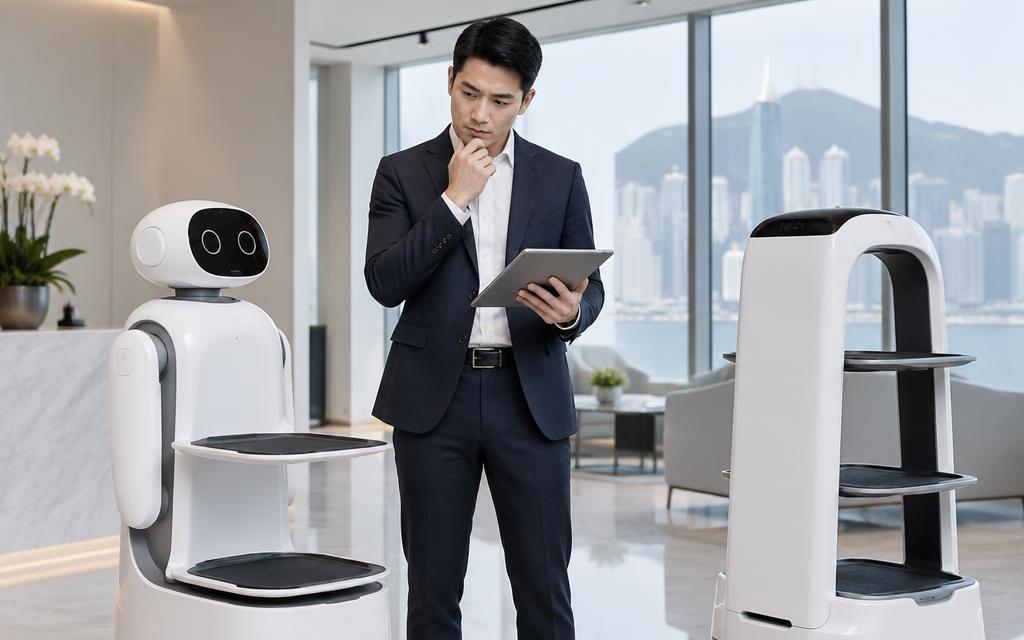
Impartial Procurement and Brand Matching

We have direct partnerships with multiple leading robotics companies, enabling us to impartially evaluate brands and products against client requirements. Clients do not need to contact vendors individually, repeat their requirements, compare complex specifications, or risk choosing the wrong equipment.

We help clients with:
  • 01Product selection
  • 02Specification verification
  • 03Solution and price comparison
  • 04Commercial discussions
  • 05Delivery arrangements
  • 06Procurement process coordination
  • 07Integration of multi-brand solutions

Robot procurement involves hardware specifications, software licensing, site conditions, regulatory compliance, and after-sales support. A mistake in any area can prevent a project from achieving its intended results. Here are common pitfalls organizations overlook:

01

Specifications are not standardized

Measurement conditions for payload, runtime, slope capability, and navigation vary by vendor. Published figures are not directly comparable; a stated “8-hour runtime” may be only half that in real-world conditions.

02

Purchase price is not total cost

Mapping, annual software licenses, battery replacement, maintenance renewals, and accessories can all incur charges after signing. Total cost of ownership is often far higher than the quoted price.

03

Buy, lease, or subscribe monthly?

Each model has different cash-flow, depreciation, and upgrade-cycle trade-offs. With rapid technological change, purchased equipment may be obsolete within two or three years.

04

Hidden site requirements

Elevator connectivity, access-control integration, Wi-Fi coverage, flooring material, and slope can each prevent equipment from operating properly if requirements are not met. These issues are often discovered only on installation day.

05

Privacy and compliance risks

Cameras, audio recording, and people counting involve the Personal Data (Privacy) Ordinance. Data storage locations and cross-border transfers also require prior review; otherwise, the organization may incur legal liability.

06

Gaps in after-sales support

Local spare-parts availability, engineer response times, and whether support is remote or requires waiting for the manufacturer to send staff from elsewhere directly affect operational losses during downtime.

07

Training and knowledge transfer

Does the vendor provide Traditional Chinese operational training and troubleshooting manuals? How will operational knowledge be retained when frontline staff leave?

08

Software requires ongoing updates

A robot is not a one-time purchase: navigation algorithms, security patches, and system compatibility depend on ongoing manufacturer updates. Confirm whether updates are chargeable, how long support lasts, and whether the equipment will become unsupported when updates end.

SERVICE S.03
03 / 05

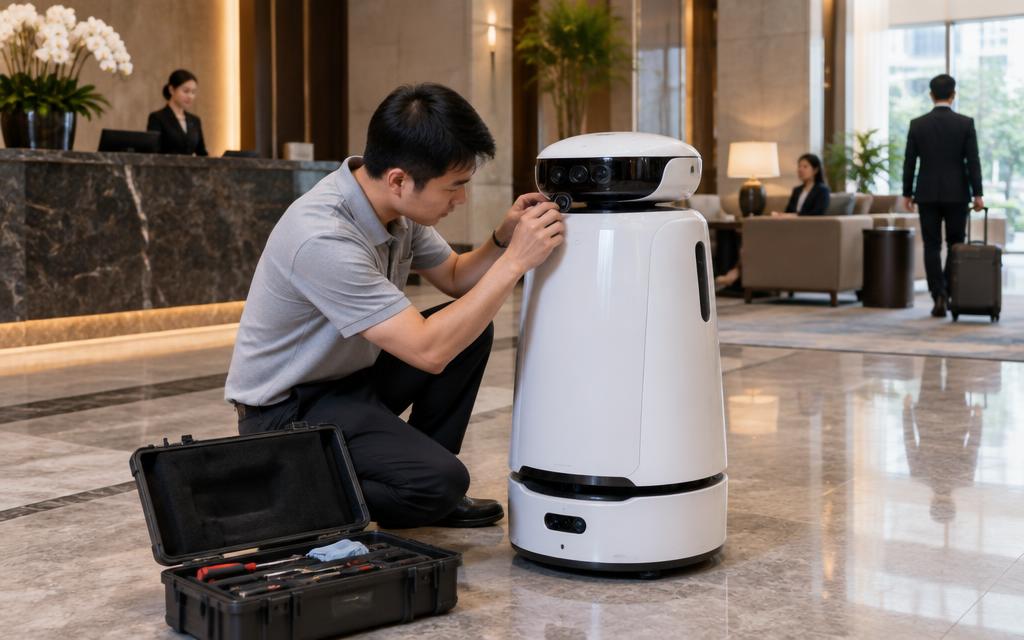
On-site integration

Flooring, levels, routes, networks, access control, elevators, and operational rhythms all affect a robot’s performance in a given setting.

We help clients with:
  • 01On-site environment assessment
  • 02Route and task-path planning
  • 03System interface integration
  • 04Coordination of elevators, access control, Wi-Fi, charging stations, and other infrastructure
  • 05Pilot deployment and operational tuning
  • 06Workflow redesign recommendations
SERVICE S.04
04 / 05

Workforce training

We provide operational training for clients’ frontline staff, managers, and equipment teams to ensure robots are operated correctly, reliably, and consistently.

Training covers:
  • 01Basic operation and task setup
  • 02Routine checks and precautions
  • 03Troubleshooting common issues
  • 04Reviewing back-end data
  • 05Operations training for managers
  • 06Handover from pilot to full operation
SERVICE S.05
05 / 05

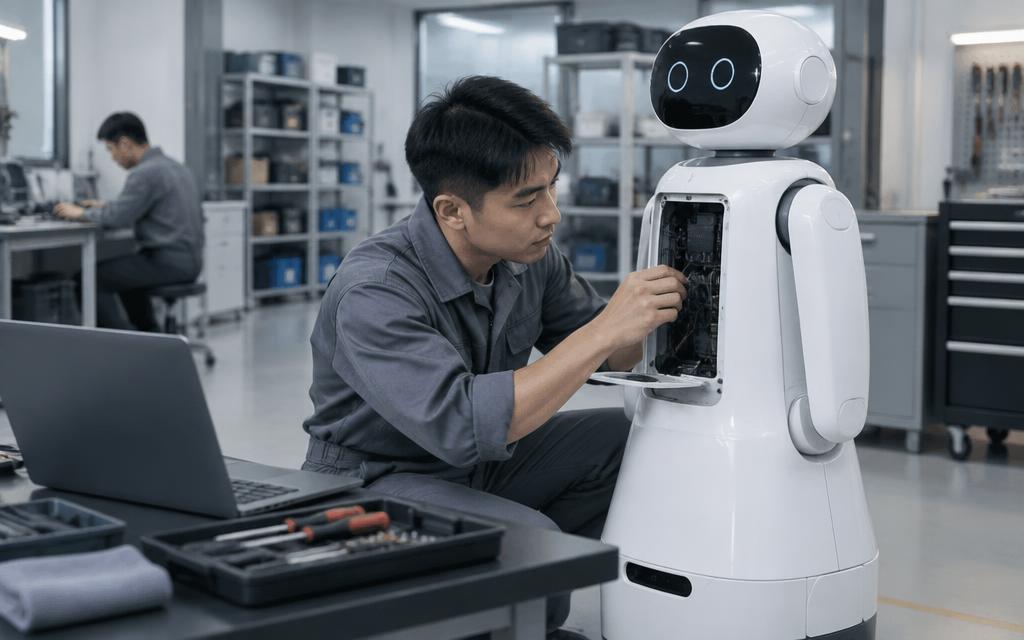
Ongoing Maintenance Coordination

We serve as a long-term service contact between clients and robotics brands, coordinating maintenance, software upgrades, troubleshooting, spare parts, and feature expansion. Clients can rely on us for unified coordination instead of communicating with multiple vendors, reducing equipment-management and cross-vendor communication costs.

Coordination includes:
  • 01Ongoing maintenance
  • 02Software upgrades
  • 03Troubleshooting
  • 04Spare parts supply
  • 05Feature expansion
Project timeline · Timeline
8–12 weeks

From initial meeting to robot deployment

This timeline is indicative for a typical organisational project. Actual progress depends on site size, equipment type and approval processes. Staff training and ongoing maintenance follow deployment to ensure long-term stable operation.

  1. Initial meeting and requirements consultation

    Week 1

    We learn about your organisation’s scenarios, workflows and objectives, identify suitable robot types and deployment directions, and answer questions about compliance and privacy on the spot.

  2. Site assessment and solution recommendation

    Weeks 2–3

    We inspect site routes, power and network infrastructure, and usage scenarios, then provide an assessment report and tailored deployment plan with equipment recommendations and budget.

  3. Procurement and equipment ordering

    Weeks 3–5

    Based on the approved plan, we help compare specifications, negotiate quotes and follow up on ordering to ensure selected equipment meets site and regulatory requirements.

  4. On-site implementation

    Weeks 5–8

    Once equipment arrives, we install, calibrate and adapt it to the site, adjusting routes, sensors and access settings to the environment and completing acceptance testing.

  5. Workforce training

    1–2 weeks after deployment

    We train frontline staff and managers in day-to-day operation, basic troubleshooting and safety practices, enabling the team to operate independently.

  6. Ongoing maintenance coordination

    Ongoing

    We regularly monitor equipment operation, coordinate servicing and repairs with suppliers, and review and optimise the deployment configuration as operational needs evolve.

Not sure which service to start with?

Tell us about your scenario and objectives, and we’ll recommend the best starting point.

Book a consultation
Autonomous service robot in the lobby of a modern building at night

Robots in every corner of the world